Quoura Ven Lou Dissata Article

There aren’t many of them, but finding an ultras group willing to do an interview for this feature on North America seemed essential to us. We’d had high hopes for Montreal, but after being led up the garden path, we finally ended up much further south, in San José. Thanks to Dan from the San Jose Ultras for his contribution [@san_lose_uitras_official]
Before we talk about the stands, can you tell us a little about the city of San José and the club?
Dan: San Jose is located in Northern California and has a population of about one million. The city is also home to the San Jose Sharks, the local NHL franchise. But it’s best known worldwide for being home to Silicon Valley, the largest technology hub in the United States—and arguably the world.
The San Jose Earthquakes were founded in 1974 by Serbian-American businessman Milan Mandaric, who also owned several European clubs during his career. The club’s history has been particularly tumultuous: over the years, it has disappeared and reappeared several times, sometimes changing its name or colors as various American professional leagues underwent restructuring.
In the modern era, the Earthquakes were among the founding clubs of Major League Soccer, established in 1996. But in 2005, the club suffered a major setback: the entire roster and coaching staff were transferred to Houston to create a new franchise, the Houston Dynamo. Fortunately, the club’s identity—its name, crest, colors, and achievements—remained officially tied to San José. Three years later, in 2008, the Earthquakes were reborn under new leadership, which remains in place today.
How did the idea to start the fan group come about, and how did the adventure begin?
Shortly after I arrived in the United States from Romania, I wanted to get involved with my local club. Before leaving my country, I already had several years of experience in the stands with Amata Ultra, the main ultra group of Steaua Bucharest.
I started attending Earthquakes games. The team was decent, even if it obviously wasn’t on Steaua’s level. In the stands, however, it was a complete disaster. There was a small “fan group” that banged on drums and repeated two or three uninteresting chants. It had absolutely nothing to do with what I considered to be a true ultra culture. So I decided to start my own group. I gathered a few friends—mostly Europeans and South Americans—and that’s how the adventure began, on September 19, 2003.
From the very beginning, we felt like we were swimming against the current. The soccer fan culture in the United States at the time was almost the exact opposite of everything needed to build a true ultra group.
So the SJU has been around for 23 years. Can you name a few memorable events in the group’s history?
In twenty-three years, as you can imagine, there are countless memories. I could write several books on the subject.
From the very beginning, our goal was to become a true ultra group. Not just to adopt the trappings—a few flags and chants—but to live by the principles and mentality of the ultras. We’ve always sought to create our own chants, design original tifos, and above all, set ourselves apart from other groups in the league.
Over the years, we’ve made many memorable road trips and put on several choreographed displays of which we’re particularly proud. That’s what we believe sets us apart from the mediocrity that unfortunately plagues much of what’s now known as the MLS fan scene.
I saw that you’ve produced a series of videos chronicling the group’s first twenty years. Is this also a way to explain your approach and attract a new audience?
We must always know and remember our history in order to build a better present and a better future. Training new members is therefore part of our day-to-day work. Unfortunately, our pool of potential recruits is extremely limited. This is nothing like Europe in the 1990s or early 2000s, when thousands of young people were looking to join ultra groups. In the United States, most soccer fans know absolutely nothing about the ultra movement. Many think that all it takes is a banner and a few flags to be an ultra group.
So it’s very difficult to find people who truly understand this mindset. When we meet someone who’s willing to learn, we have to teach them the basics, season after season.
How many members does the group have today?
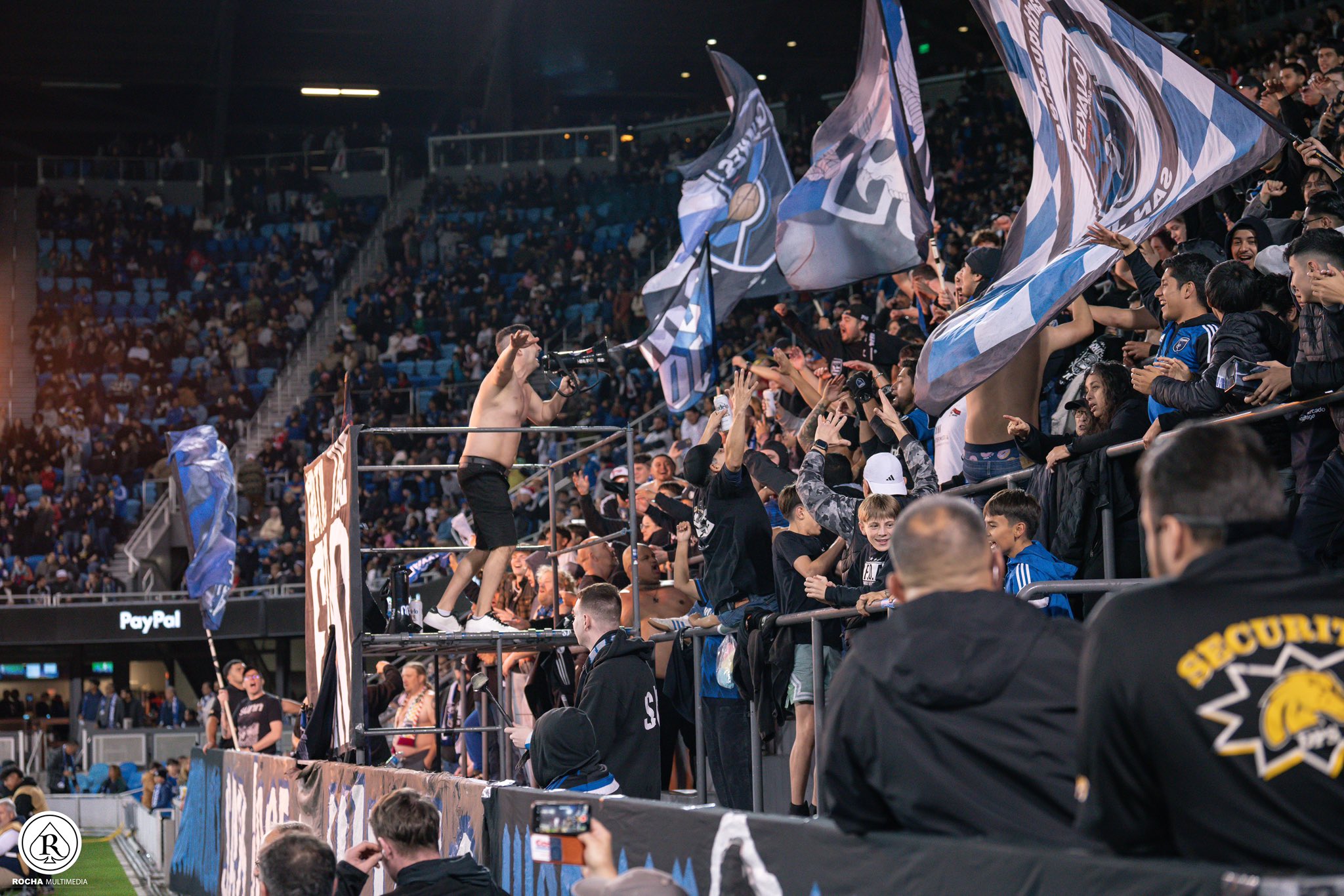
Our core group consists of about 100 members. However, on game days, our section usually draws a crowd of nearly 600 people.
How are relations between your group and the club’s management?
Since the current president took office, we’ve maintained a fairly healthy working relationship with the club. He was already familiar with us from when he held other positions within the organization. He respects our work, the boundaries we set regarding the club’s interference, and above all, our independence. Unlike most fan groups in this league, we will never accept any funding from the club for our travel, our choreographed displays, or any other activities.
Before this administration, relations were much more complicated, both with the club and with MLS, which work practically hand in hand. They are opposed to everything we stand for. They only want groups that wave flags, sing, and obey like puppets.
They appreciate groups that denounce their own members when the club disapproves of certain behavior. To us, that’s simply repugnant. From day one, we’ve made it clear that we’ll never betray our own. We’d rather face a collective penalty than name one of our members.
This ties into that question: at home games, are you free to support your club however you want?
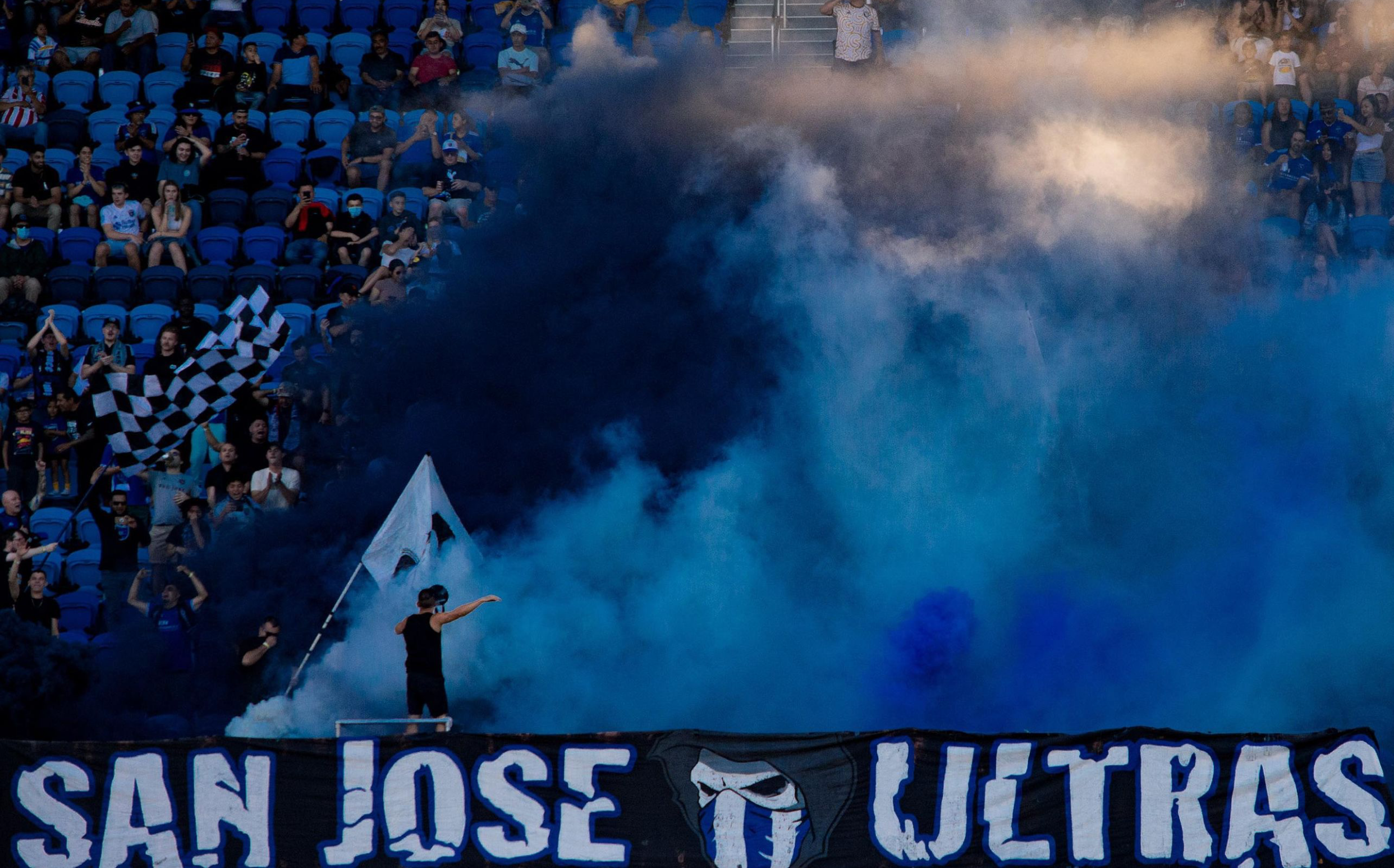
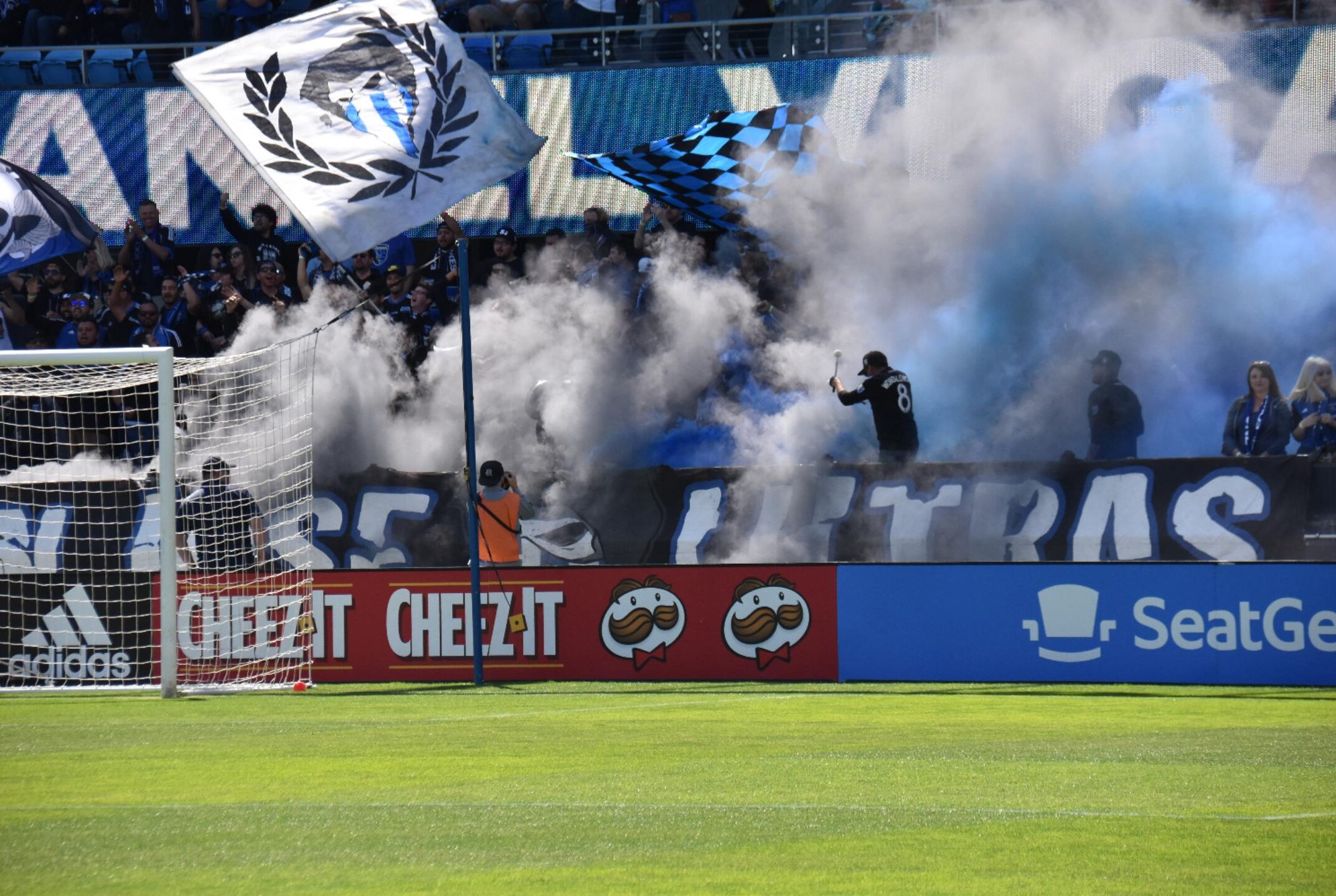
For the most part, yes. Of course, the use of pyrotechnics remains illegal and generally results in penalties when we use them. But aside from that, we can support our team however we see fit, and the situation has improved significantly in recent years.
I imagine that when it comes to pyrotechnics, it’s pretty complicated. Are there any specific regulations? What are the risks?
It depends on the clubs. Some have practically “legalized” pyrotechnics, and their fan groups use smoke bombs or flares after every goal.
Personally, I think it’s ridiculous. Pyrotechnic displays should be reserved for special occasions: an important game, an anniversary, or an exceptional event. When they’re scheduled after every goal, they completely lose their meaning. It becomes something mechanical, corporate—almost robotic.
For a long time, the penalty was a one-year stadium ban. Today, when those responsible cannot be identified, the authorities prefer to penalize the group as a whole by banning, for example, banners, flags, or other forms of fan support.
Similarly, what’s the situation when traveling to away games? The distances are immense, but do you still manage to follow your team?
Yes, we continue to travel to away games, mainly along the West Coast: Los Angeles, San Diego, Portland, or Seattle.
The closest is Los Angeles, about 600 kilometers away. For a European, that would already be a long trip. For us, it’s practically next door.
In 2010, we even went to New York with only four days’ notice. The game was on a Thursday night, so we had to book a six-hour flight and take time off work practically at the last minute. Despite that, we made the trip because our team was playing a playoff game. It was an incredible experience.
The Earthquakes rarely qualify for the playoffs, so we mainly face teams from the Western Conference, since the MLS is divided into Eastern and Western Conferences.

If I’m not mistaken, there are other fan groups in San José. Are they also ultras-oriented?
No. The other group in San José has absolutely nothing to do with the ultras. They have a few banners and flags, but they mostly spend their time beating eight drums throughout the entire game. There are very few chants. It’s more like a percussion group than an ultras group.
What is your team’s main rivalry?
The LA Galaxy remains our historic rival. But, more broadly, we hate Los Angeles and its residents. So it stands to reason that we also hate LAFC.
To me, that club represents everything I hate about modern soccer. Their main fan group was created by the club, its leaders are paid by the club, and there are all sorts of more or less questionable arrangements. They also love to draw attention to themselves on social media, often making fools of themselves.
There are a lot of groups like that today: no principles, just putting on a show. A real circus.

How would you describe the MLS fan base? Is it comparable to that of the NBA or the NFL?
I think American fans generally have the same mindset, regardless of the sport.
Their first instinct is to ask, “What can the club do for me?” or “How will it entertain me? ” rather than “What can I do for my club?” Their priority is the food, drinks, or Wi-Fi at the stadium—way before the atmosphere.
Building a true ultra group in such an environment is like trying to build a fortress on sand. The “human material” is extremely rare.
That’s also why we’ve remained a relatively small group. We prefer to welcome people who are already familiar with ultra culture or who genuinely want to learn about it, rather than just racking up members to fill seats.
How do Americans view ultra culture?
As I’ve already said, the majority of American fans are the polar opposite of what ultra culture represents.
Being an ultra means putting others first. It means putting the group and the club before yourself. It means being willing to make sacrifices, maintaining your independence, and funding your own activities rather than waiting for help from the club.
Being an ultra means going to the stadium to sing, wave flags, and travel to away games—not to shoot videos, take selfies, or seek attention. Yet the majority of MLS fans—including those in officially organized groups—operate exactly the opposite way.
I often feel like I’m watching a huge circus. Many people use their teams to promote their own political or social causes. Some MLS games feel more like activist rallies where, in the background, a few players are playing a soccer match.
If you had to sum up the American ultra movement in a few words, how would you describe it?
In my view, there simply isn’t a real ultra scene in the United States.
I believe there are only two real ultra groups: Montreal and us.
A few others try to imitate the South American Barras Bravas model, with lots of drums and instruments. But unlike the South American groups, they actually use their voices very little.
All the others are just groups of fans. They sometimes wave a few flags, put on a tifo every now and then, and sing the same three or four generic chants. But in my opinion, they don’t have the ultra mentality.
Is this movement closer to what you find in South America or in Europe?
Honestly, neither one nor the other. A few groups try to replicate the model of the South American Barras Bravas with lots of drums, but without capturing the vocal power or the mindset that characterizes them. Others copy certain aspects of European culture, but it often remains superficial.
Ultimately, most MLS groups have developed their own model, which is a far cry from what I call true ultra culture.
We’ve touched on this a bit already, but what is the current situation for ultras in terms of their relationship with the authorities and police crackdowns?
In the beginning, this league was like a real prison. The clubs and MLS were ready to call the police and prosecute fans for insults, pyrotechnics, or even simple brawls.
Today, the situation remains complicated, but when I see what’s happening in Europe now, I almost feel like we’re no longer the worst off. Repression has become very similar pretty much everywhere.
With all the cameras and surveillance technology installed around the stadiums, it’s becoming extremely difficult to avoid penalties.
At least we still have some freedom when it comes to traveling to away games. MLS hasn’t implemented a system comparable to Italy’s Tessera del Tifoso or the collective travel bans seen in Greece or the Netherlands.
In your opinion, what is the main issue you’d like to see addressed?
I’d like the authorities to stop treating pyrotechnics this way. Smoke bombs are already frowned upon, but if you use a flare, you simply risk going to jail and receiving a lifetime stadium ban.

What’s the outlook for the ultras? How do you see the future of American stands?
I’ve been part of this adventure for twenty-three years now. Since San Jose Ultras was founded in 2003, I haven’t missed a single home game. I don’t go to the stadium to sit down and watch a show. I go there to work. In fact, I pay for my ticket… to work.
Since I spend the game facing the stands, I barely look at the field. My only mission is to make sure the group gives 100% to support the team.
When I founded San Jose Ultras twenty-three years ago, I was probably more optimistic than I am today. I’ve always tried to do things the right way, to give my all while staying true to the principles and mindset of this magnificent ultra culture. I’m proud of what we’ve built. In an extremely hostile environment, we’ve truly left our mark.
On the sporting front, MLS is improving every year: the stadiums are more beautiful, the players are better, and the league is more attractive. But from the perspective of ultra culture, I’m much less optimistic. Unfortunately, I also feel that, even in Europe, things are slowly fading away
The younger generations seem preoccupied with other priorities. Our society is becoming increasingly individualistic, focused on image and the pursuit of attention. Yet ultra culture represents exactly the opposite: sacrifice, team spirit, and putting the collective before the individual. The world is moving in a direction opposite to our values.
But as I’ve always said, going against the grain is difficult… and that’s precisely what makes us stronger. I love that challenge. Even though I’m pessimistic about the future, we’ll keep fighting until the very end.
Are you in touch with the Montreal group?
The main group, Ultras Montréal, disbanded a few years ago when the club’s owner decided to change the team’s name and logo. The members had warned that if he went through with his plan, they would stop coming to the stadium. They kept their word. I find that attitude extremely admirable. In my opinion, no other MLS group would have been capable of making such a decision.
Since then, former members have formed new groups. They’re in the midst of rebuilding, but I still consider them, along with us, to be the only true ultras in MLS. We maintain close ties with their leaders. We became friends many years ago, at a time when MLS was trying to make us disappear for good. They were the only ones to publicly show their solidarity with us.
Conversely, many other groups supported the league and even called for our exclusion themselves. In my opinion, this perfectly sums up the lack of a true “ultra” mentality in America. Imagine adults turning on their own comrades to get them into trouble. To me, MLS fan groups are often a joke.

Are there any joint efforts to try to advance supporters’ rights in the United States?
Not really. There are a few supporters’ organizations, but they’re more like fan conventions than anything else. A bunch of misfits
who get together to watch PowerPoint presentations on “how to be better supporters.” It’s no surprise, really, that most MLS groups have the same chants, the same political stances, and the same ideas for tifos. None of this has anything to do with true ultra culture.
In fact, at these meetings, these organizations have regularly singled us out as a problem and asked the league to ban us. I find that pathetic.
The World Cup is coming up this summer. Do you have any particular expectations?
My home country, Romania, won’t be there, so I don’t have a particular interest in this World Cup. Of course, I hope the United States does well, but, generally speaking, this competition has lost much of its charm.
Prices have become exorbitant, the event is becoming increasingly corporate, the number of teams keeps growing… I feel like it’s now more of a gigantic money-making machine serving FIFA, UEFA, and all those corrupt organizations that have stolen soccer from the working class.
Do you think this World Cup can attract a new audience to the MLS stadiums?
Yes, probably. The problem in the United States isn’t attendance. MLS already draws large crowds to the stadiums. The real issue has more to do with the quality of fan culture and the atmosphere that comes with it. The league views soccer primarily as a commercial product, whereas, for us, it should first and foremost be a passion.
A question about fanzines. Are there any in American stadiums?
No, there aren’t any. Maybe one day we’ll start our own… and we’ll return the favor by dedicating an article to you! 🙂

To wrap up, a more personal question. What does the word “ultra” mean to you?
I think you’re born an ultra. You either are one… or you aren’t. Being an ultra means being selfless. It means defending your independence. It means refusing to follow trends and staying true to your principles, even when you find yourself in the minority.
An ultra supports his club; he doesn’t wait for his club to support him. He also supports his brothers in the stands.
Your role becomes even more important when your team or your group is going through a difficult time. That’s precisely when they need you, and that’s when your commitment must be even stronger.
It’s easy to support someone when everything is going well. True character is revealed when things go wrong.
And above all, never give up. You may be banned from the stadium. Your club may disappear. But you will remain an ultra until your last breath.
If you look at the photos of our section, you’ll understand why our main banner bears this motto: “Until The End.”
Original article: